Contents
0%


Bwindi Impenetrable National Park
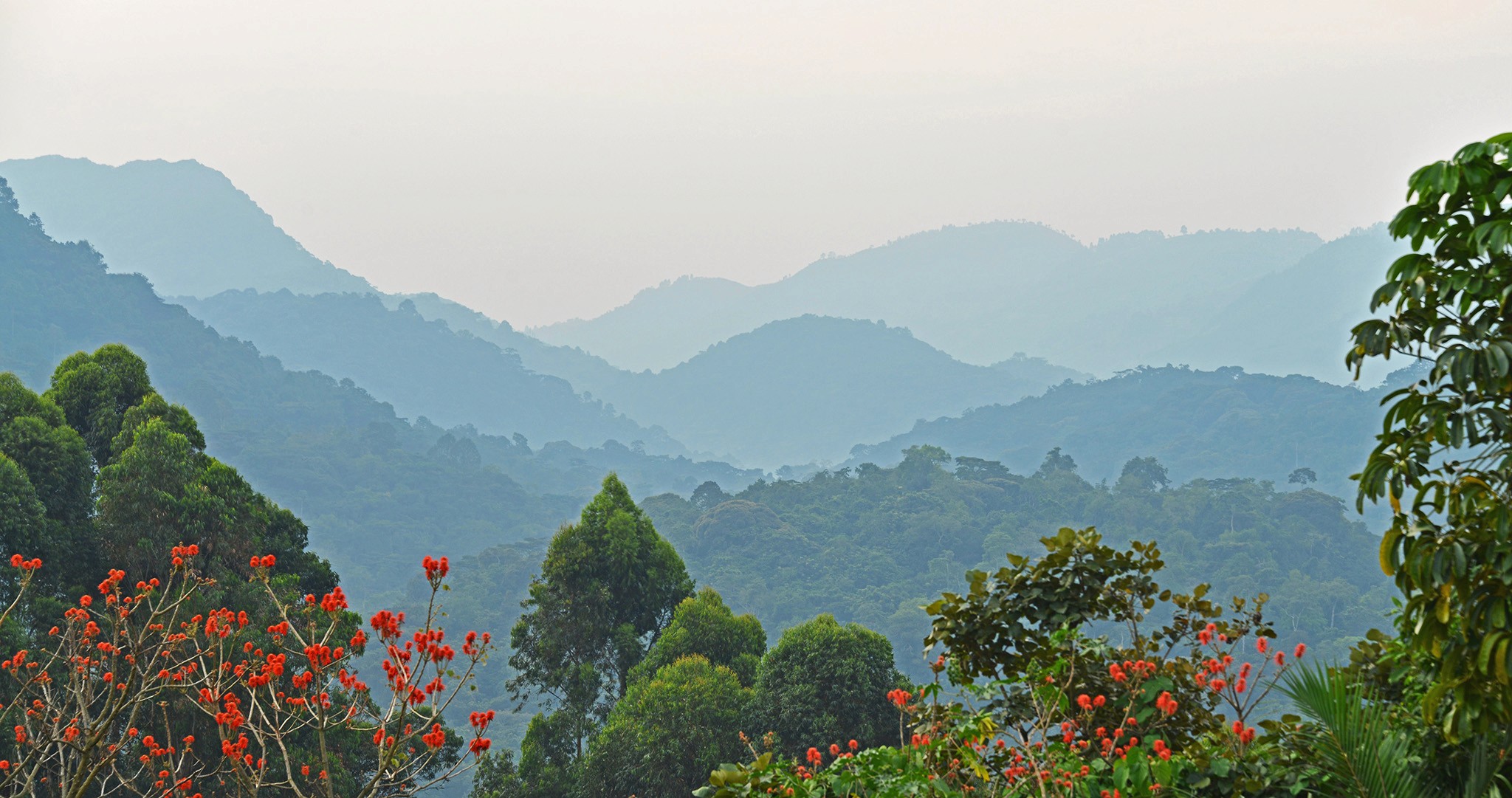
The Bwindi Forest canopy.
In southwestern Uganda, mist hangs on ancient trees and primate calls echo through thick forest. Here you'll find Bwindi Impenetrable National Park, a conservation success story and a place where visitors can meet mountain gorillas up close.
1. Key Takeaways
Bwindi Impenetrable National Park is one of the world’s great conservation success stories and gives visitors unforgettable wildlife experiences. Its journey from a threatened forest to a thriving park shows how tourism can help protect endangered animals and support local people.
Conservation Impact: Each visitor to Bwindi helps protect mountain gorillas. Tourism revenue supports anti-poaching efforts, research, and community projects, raising gorilla numbers from 620 in the late 1980s to over 1,069 today.
Authentic Wilderness Experience: Bwindi gives visitors a true wilderness adventure, with close wildlife encounters in one of Africa’s oldest and richest ecosystems.
Cultural Significance: The park lets visitors connect with local communities and learn how conservation, tourism, and daily life are linked. This helps people appreciate both wildlife and cultural diversity.
Value Proposition: Gorilla permits in Uganda cost $800, much less than Rwanda’s $1,500. Uganda is home to over half the world’s mountain gorillas and offers amazing viewing at a better price.
Best Practices for Visitors: Plan ahead by booking permits 3-6 months early, get physically ready, bring the right gear, and be prepared for changing weather and tough trekking conditions.
Long-term Sustainability: Bwindi shows that protecting key species can help save entire ecosystems and give local people new ways to earn a living without depleting natural resources.
2. Location and Geography
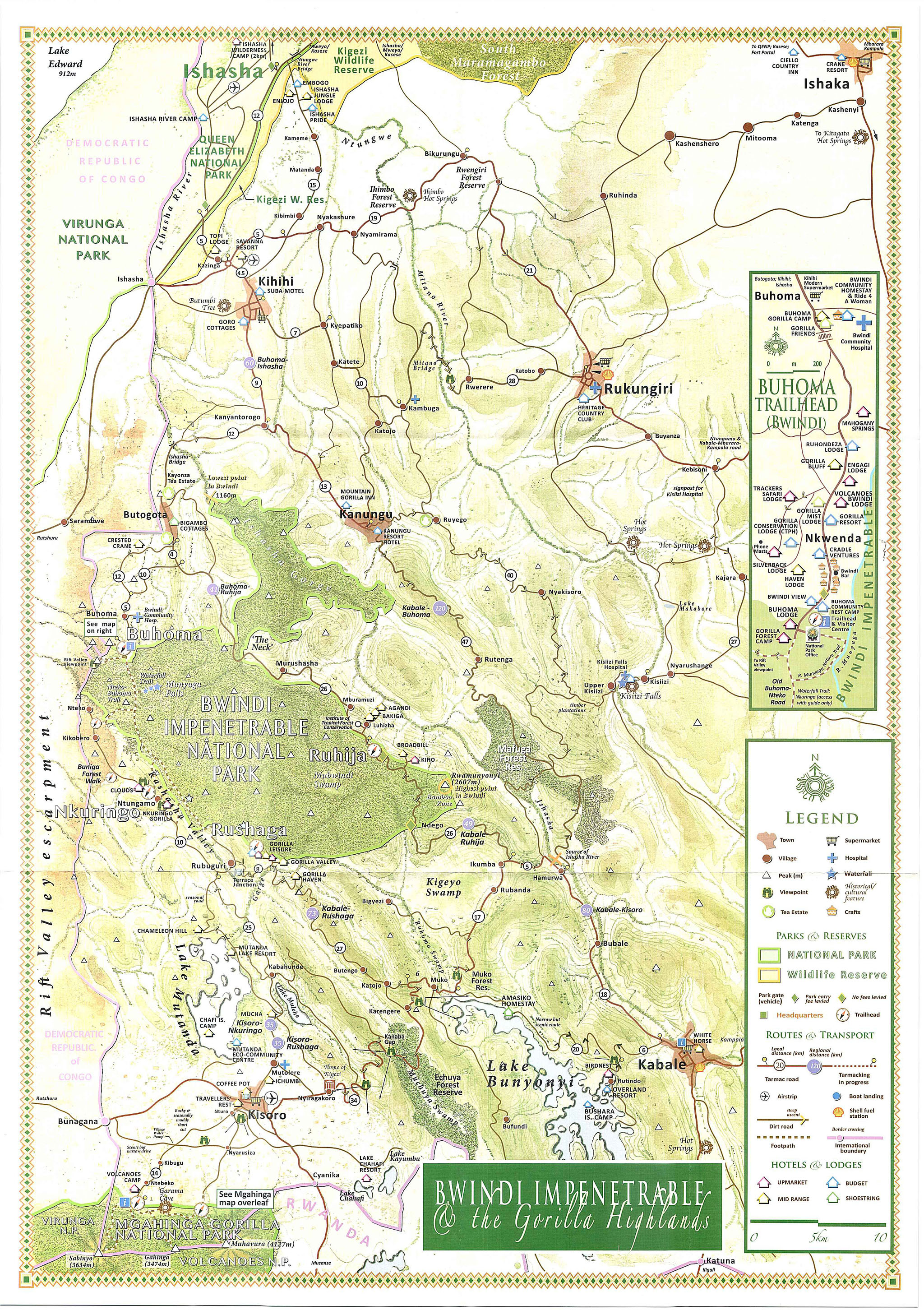
A map showing Bwindi Impenetrable National Park and the gorilla highlands.
Bwindi Impenetrable National Park is located in southwestern Uganda, covering parts of Kisoro, Kabale, Kanungu, and Rukungiri districts. It borders the Democratic Republic of Congo and is part of the larger Virunga ecosystem, which stretches across three countries. This location forms an important wildlife corridor, helping gorilla populations maintain genetic diversity across borders.
The park covers 331 square kilometers of steep ridges and deep valleys, with elevations from 1,160 meters in the north to 2,607 meters at Rwamanyonyi Peak in the southeast. These changes in height create different microclimates that support many species. The name “Bwindi” comes from the local Rukiga word for “dark place,” reflecting the dense canopy that lets in little sunlight.
Bwindi is called “impenetrable” because its thick forest, with old trees, tangled vines, and dense undergrowth, forms natural barriers that have protected the area for thousands of years. The difficult terrain and dense vegetation kept the forest mostly untouched until conservation efforts started. Many visitors feel like they are stepping back in time when they walk through this wild forest.

A map showing Bwindi Impenetrable National Park and the gorilla trekking sectors.
3. History of Bwindi
Bwindi’s history goes back millions of years, as the forest survived the ice age and became one of Africa’s oldest ecosystems. It served as a refuge for species that vanished elsewhere. Archaeological evidence shows that people have lived here for over 40,000 years, especially the Batwa people, who knew the forest well and lived in harmony with it long before national parks existed.
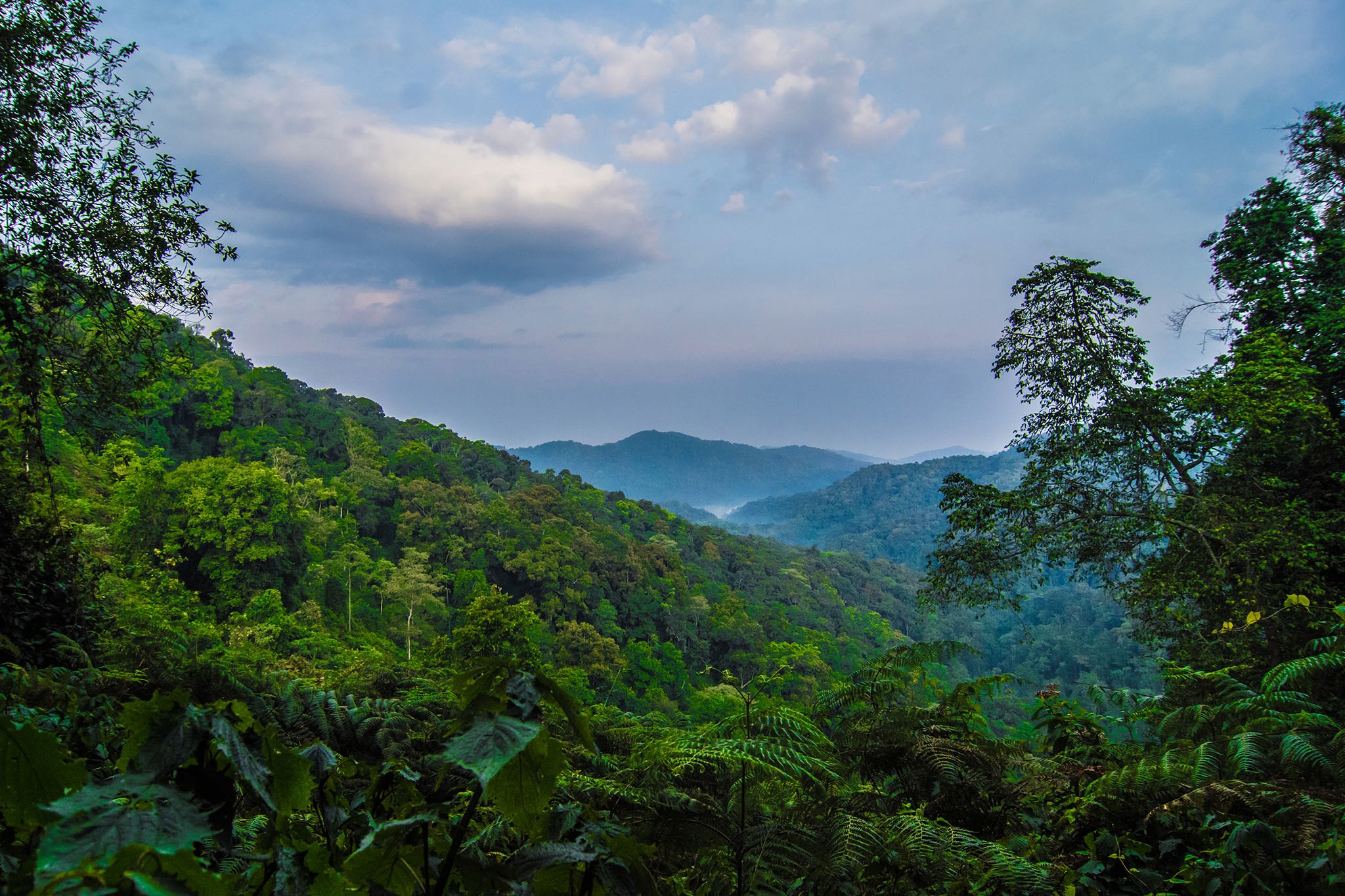
Bwindi Forest
Colonial administrators first recorded the forest in the early 1900s, noting its biodiversity but mainly seeing it as a source of timber. In 1932, it became the Kasatoro and Kayonza Forest Reserves, which offered some protection but still allowed limited logging. In 1961, the Impenetrable Central Forest Reserve was created, expanding protection and starting to limit human activities.
In 1991, Bwindi changed from a forest reserve to a national park, mainly to protect the critically endangered mountain gorillas. This shift marked a new focus on protecting the ecosystem and promoting sustainable tourism, rather than using the forest for resources. Uganda’s decision showed a strong commitment to wildlife conservation over short-term profits from logging and farming.
During the 1990s and 2000s, Bwindi faced problems like poaching, illegal mining, and people clearing land for farming. Community-based conservation programs helped turn former poachers into park protectors, creating a model used in other parts of Africa. Today, Bwindi shows that local communities and wildlife can live together when tourism offers sustainable income.
4. The Mountain Gorillas

A silverback mountain gorilla in Bwindi eating a plant shoot.
Nearly half of the world’s mountain gorillas live in Bwindi’s misty forests, making the park vital for their survival. About 459 gorillas live here out of a global population of around 1,069. Their numbers have grown from just 620 in the late 1980s, making each visit to Bwindi part of a major conservation success.
There are 21 habituated gorilla families in the park, with 19 open to tourists and 2 used for research. Each family has its own personality, social structure, and territory. Habituating a group takes 2-3 years and involves slowly getting gorillas used to people without changing their natural behavior. This process needs patience and skill from researchers and guides.
Mountain gorillas are gentle giants. Adult males, called silverbacks, can weigh up to 200 kilograms and stand almost 6 feet tall. Even though they are large, they mostly eat plants like leaves, shoots, bark, and fruit. Each family is led by a dominant silverback, who protects the group and decides where they go and what they eat.
Meeting these primates is special because they are so much like us. They share 98% of our DNA and show emotions, family bonds, and unique personalities. Seeing a mother hold her baby, watching young gorillas play, or making eye contact with a silverback creates a strong connection. These moments remind us of our shared history and our duty to protect them.
5. Gorilla Trekking Experience
Gorilla trekking in Bwindi is an amazing wildlife experience, but it requires both physical and mental preparation. Treks start at dawn with a briefing from park rangers about safety, gorilla behavior, and the family you’ll track. Guides also share recent stories about your assigned group and its members.
The cost of gorilla permits in Uganda is $800 for non-resident foreigners, significantly lower than Rwanda’s $1,500 permits, making Uganda an attractive destination for budget-conscious travelers seeking this once-in-a-lifetime experience. Only Ugandans and Foreign Residents are allowed to book gorilla permits directly through Uganda Wildlife Authority, so most international visitors must book through licensed tour operators who can secure permits on their behalf.
The difficulty of gorilla trekking depends on which family you are assigned and where they are that day. Some treks are easy and take 2-3 hours on flat ground, while others involve steep, muddy climbs and can last 8 hours or more. The unpredictability adds to the adventure, as you might find gorillas quickly or have to search deep in the forest.
When you meet the gorilla family, it is both humbling and exciting. You spend one hour with them, keeping at least 7 meters away while watching their daily routines. The forest is quiet except for the sounds of gorillas eating, communicating, or moving. You can take photos, but bring extra batteries since the cold and humidity drain power, and avoid using flash or loud shutters.
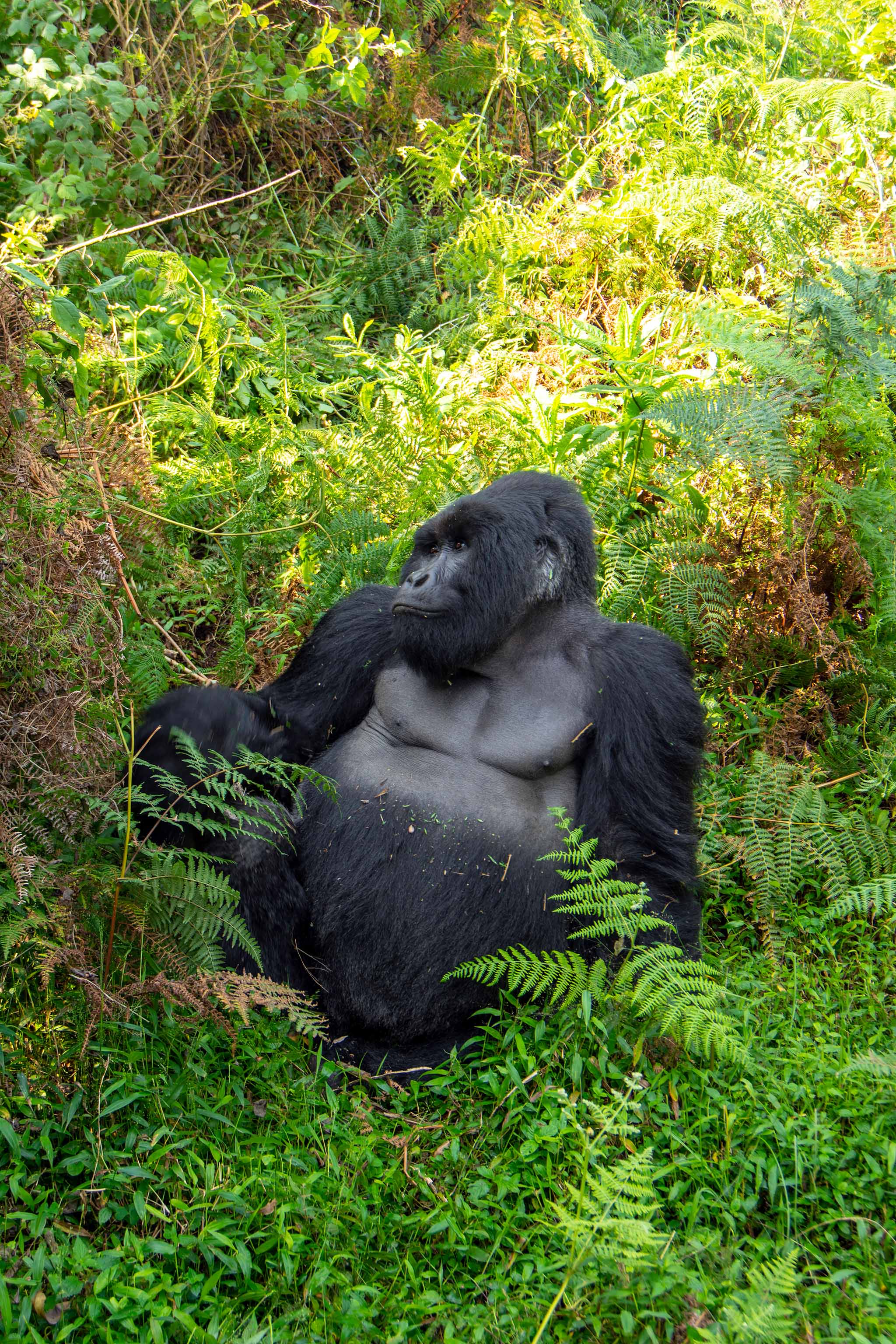
A mountain gorilla in Bwindi enjoying the comfort of its territory.
6. Biodiversity Beyond Gorillas
While mountain gorillas rightfully claim the spotlight, Bwindi’s biodiversity goes much further. The park is home to many primates, including endangered chimpanzees, L’Hoest monkeys, blue monkeys, red-tailed monkeys, guereza colobus, olive baboons, and nocturnal species such as galagos and pottos. Nowhere else in East Africa has such a variety, giving visitors the chance to see many species in one trip.
Larger Mammals and Their Conservation Status
Bwindi’s larger mammals show both the park’s conservation successes and the challenges that remain:
Endangered Species:
• Mountain Gorillas - The park’s flagship species, with populations steadily recovering
• Chimpanzees - Small populations exist but face habitat pressure
Vulnerable Species:
• L’Hoest Monkeys - Forest specialists requiring pristine canopy habitat
• African Elephants - Small forest elephant populations occasionally traverse the park
• Shelly’s Crimson Wing - A rare bird species endemic to the region
Stable Populations:
• Red-tailed monkeys, blue monkeys, and guereza colobus maintain healthy numbers
• Olive baboons adapt well to forest edge environments
• Duikers, bushbuck, and giant forest hogs represent important prey species
• Carnivores, including golden cats, servals, civets, and genets, maintain the ecosystem’s predator-prey balance
Bwindi is also home to over 350 bird species, including 23 that are only found in the Albertine Rift. This bird diversity comes from the park’s location at the meeting point of different ecological zones and its history as a refuge during climate changes. Birdwatchers can see species here that are found nowhere else, making Bwindi important for both conservation and research.
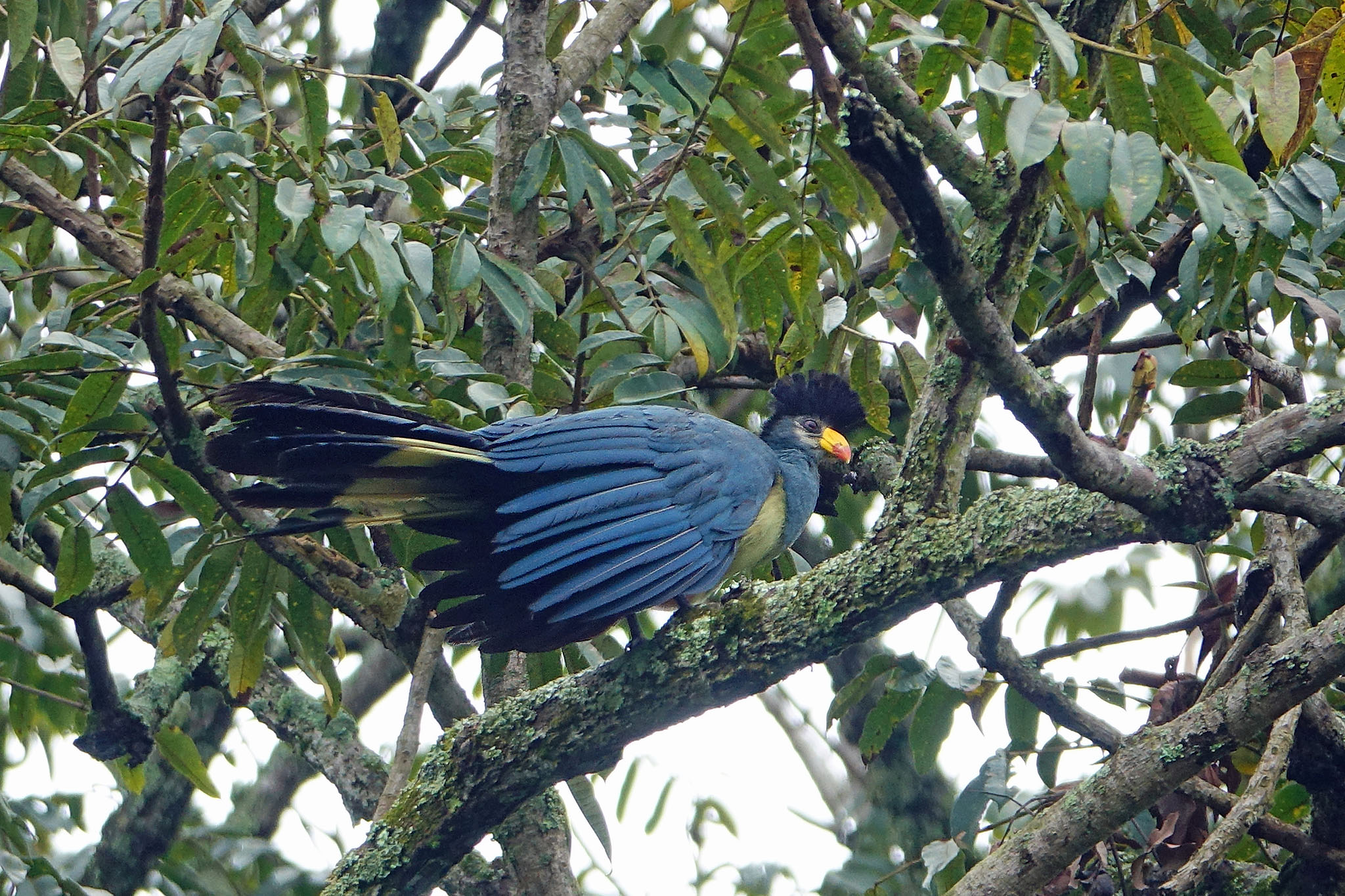
A great blue turaco in a tree canopy in Bwindi — it's known as the bushman's timekeeper.
Endemic Albertine Rift Birds and Their Conservation Status
The Albertine Rift endemic birds in Bwindi represent some of Africa’s most specialized and threatened avian species:
Vulnerable Species:
• Shelley’s Crimson Wing - Extremely localized distribution
• African Green Broadbill - Requires an undisturbed forest canopy
Never Threatened (Stable):
• Kivu Ground Thrush - Well-adapted to forest floor environments
• Dwarf Honey Guide - Benefits from diverse flowering plants
Other Notable Endemics:
• Dusky Crimson Wing, Strange Weaver, Regal Sunbird, Purple-breasted Sunbird
• Blue-headed Sunbird, Rwenzori Batis, Yellow-eyed Black Flycatcher
• Red-faced Woodland Warbler, Grauer’s Warbler varieties
• Collared Apalis, Montane Masked Apalis, Red-throated Alethe
• Stripe-breasted Tit, Rwenzori Nightjar, Rwenzori Turaco, Handsome Francolin
Bwindi’s plant life is just as impressive, with over 200 tree species, 104 types of ferns, and many medicinal plants that local communities have used for generations. Because the forest is so old, some plants are leftovers from when tropical forests covered much of Africa. This plant diversity supports all the animal life in the park.
7. Conservation Efforts
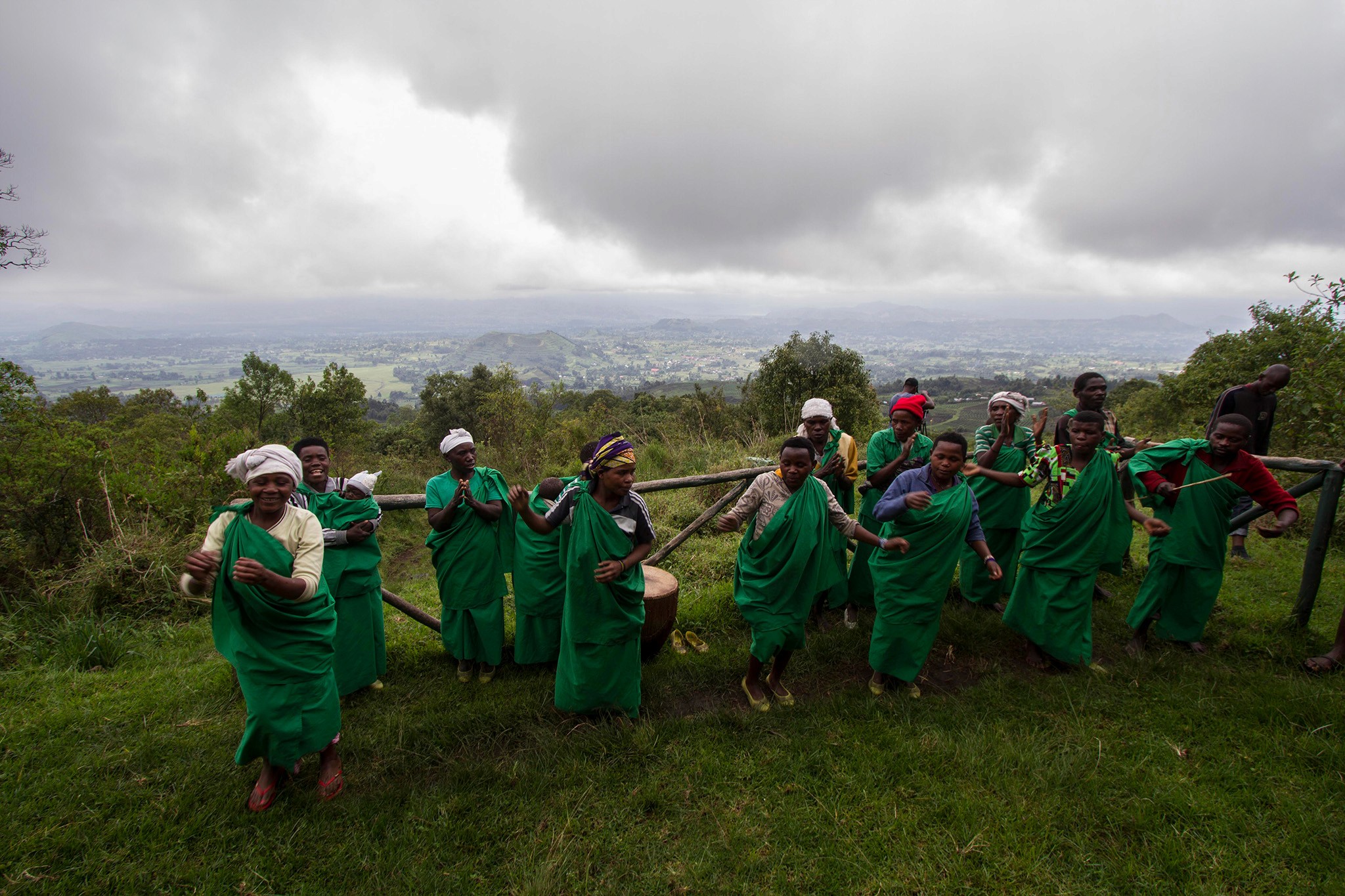
Batwa people entertaining tourists in Bwindi Impenetrable National Park.
Bwindi’s change from a threatened forest to a conservation success is one of Africa’s great environmental achievements. In the 1980s, logging, poaching, and farming threatened the park as local people faced poverty and few resources. Things improved when people realized that mountain gorillas could bring sustainable income through well-managed tourism, giving communities reasons to protect the forest.
Anti-poaching efforts in the park have shifted from strict enforcement to community-based approaches that tackle the reasons behind wildlife crime. Many former poachers now work as guides, rangers, or community liaisons, using their knowledge to help conservation. This shows that offering new job opportunities can protect wildlife better than punishment alone.
Research and monitoring in Bwindi go on year-round, with scientists from many countries studying gorilla behavior, forest ecology, and conservation. The Max Planck Institute for Evolutionary Anthropology runs a long-term research station here, providing important data on gorilla genetics, behavior, and health. This research helps us understand gorillas better and guides decisions to keep them safe in the future.
Community-based conservation programs make sure that benefits from gorilla tourism reach local villages. Twenty percent of park entrance fees go to communities for building schools, health centers, and other projects. These real benefits encourage people to support conservation and report illegal activities in the park.
8. Local Communities and Culture
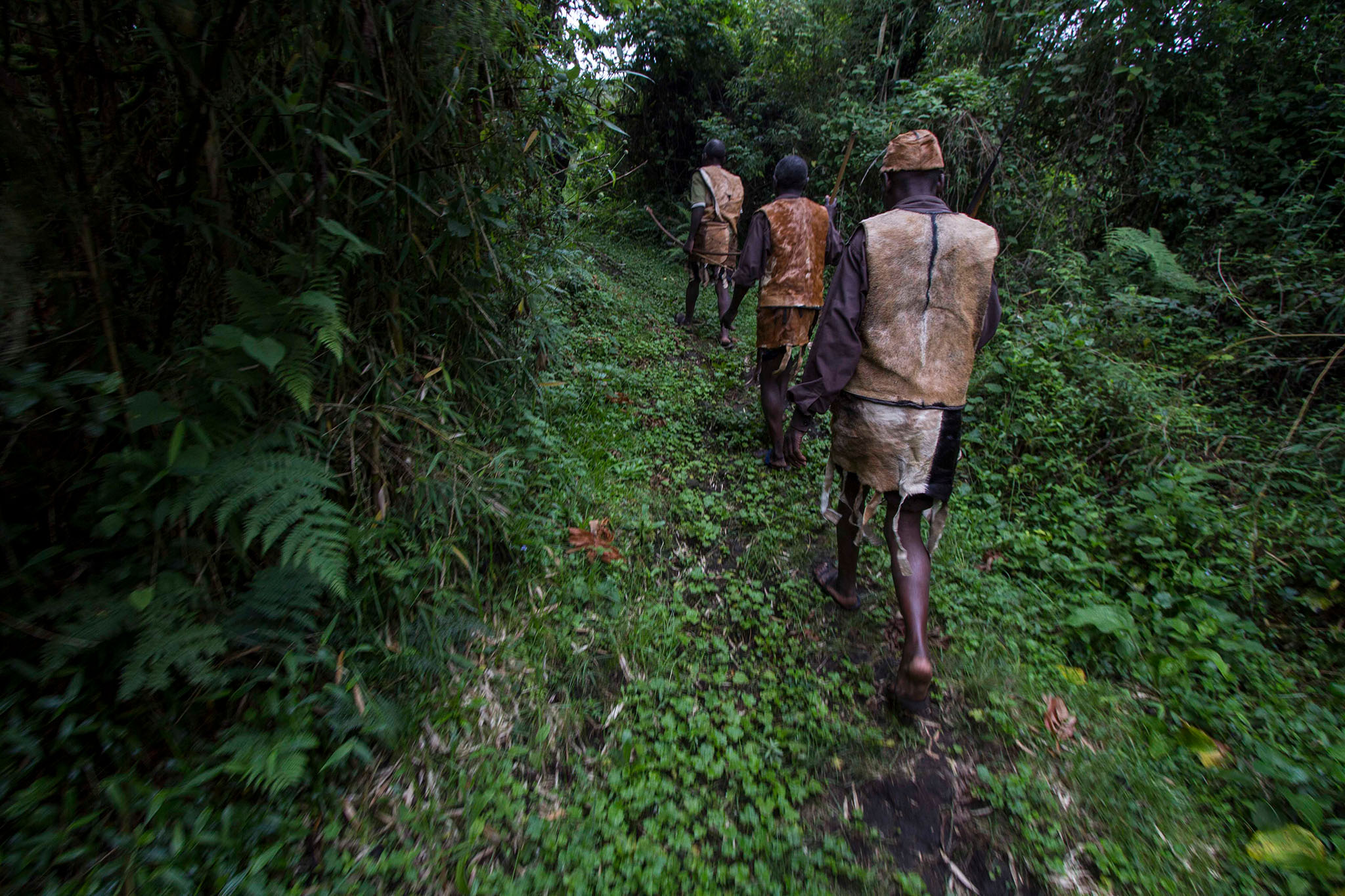
Batwa people taking tourists through a normal day in their lifestyle and traditions - bush life in Bwindi before it became a national park.
The Batwa people, sometimes referred to as “pygmies,” are the original inhabitants of Bwindi. For thousands of years, they lived sustainably in these forests until conservation rules changed their way of life. The Batwa have a deep understanding of medicinal plants, animal behavior, and how to navigate the forest—knowledge that scientists are just starting to value. Their traditional hunting and gathering had little impact on the environment and kept them closely connected to the forest.
When Bwindi was made a national park, the Batwa were displaced from their ancestral land. This caused social and economic problems that conservationists are still trying to solve. To address the unfairness of outsiders benefiting while the Batwa lost out, new programs now involve the Batwa in tourism and conservation. Visitors can learn traditional forest skills from the Batwa, and these activities help provide income for their community.
Community tourism in Bwindi includes all the ethnic groups living near the park, not just the Batwa. This creates many chances for cultural exchange and economic growth. Village walks let visitors see traditional farming, local crafts, and community projects funded by tourism. These experiences help people understand how conservation, tourism, and local livelihoods are connected.
Local attitudes toward the park have changed, showing that conservation works best when communities are partners, not opponents. People who once opposed the park now support it strongly because they have seen how gorilla tourism can offer lasting economic alternatives to using the forest for resources. This shift is a good example for other conservation projects in Africa and elsewhere.
9. Practical Visitor Information
Reaching Bwindi takes some planning, but there are several ways to get there for different budgets and schedules. The closest major airport is Entebbe International Airport near Kampala. From there, you can take domestic flights to Kihihi or Kisoro airstrips, which serve different parts of the park. Flying saves a lot of time, but it costs more and flights can be delayed by weather.
You can also reach Bwindi by road, but the drive from Kampala takes 8 to 10 hours and can be tough. The route goes through beautiful areas like Lake Mburo National Park, the Kigezi Highlands, and many traditional villages, giving you a look at rural Ugandan life. Although the drive is long, it offers cultural experiences and wildlife sightings you won’t get by flying.
If you visit Bwindi, you must have a yellow fever vaccination certificate, and malaria prevention is recommended since the area has malaria. Gorilla trekking can be physically demanding, so you should be reasonably fit. However, people of different ages and abilities can still join, as porters are available to help carry gear and assist on tough parts of the trail.
What you pack will depend on the season and your activities, but you should bring waterproof hiking boots, rain gear, insect repellent, and clothes you can layer for changing weather. Protect your camera from moisture, and bring binoculars for spotting wildlife. Most importantly, be patient and flexible—wildlife viewing depends on nature, not on a set schedule.
10. Sample Itineraries With Bwindi
(Luxury Gorilla Trekking Safaris)
Exclusive gorilla treks through ancient rainforest, balanced by five-star comfort, fine dining, and quiet luxury in the wild.

11. Sectors of the Park
Bwindi has four sectors, each with its own unique experiences, scenery, and gorilla families. This variety lets visitors pick a sector that matches their interests, fitness, and where they want to stay. Knowing what sets each sector apart helps you decide where to go for your gorilla trek and what else you might want to do.
Buhoma Sector is the oldest starting point for gorilla tracking in Uganda and has the best-developed tourism facilities. Found in the park’s north, Buhoma gives access to six habituated gorilla families and offers the most accommodation choices, from budget to luxury. Its gentle terrain suits visitors with moderate fitness, and there are also cultural activities and forest walks if you want something besides gorilla trekking.
Ruhija Sector is on the park’s eastern edge and has the highest tracking sites, giving you amazing views of the forest ridges and the Virunga volcanoes. Five habituated gorilla groups live here, and the area is great for birdwatchers, with many rare Albertine Rift species. The higher elevation means cooler weather and different forest and wildlife experiences.
Nkuringo Sector, in the south of the park, is the most challenging for trekking. You’ll need to make a steep 600-meter descent from Nteko Ridge into Kashasha Valley to find the Nkuringo gorilla group. Although it’s tough, you’ll be rewarded with stunning views and a chance to learn traditional Batwa forest skills. Because it’s remote, there are fewer visitors, but you’ll need to be fit and well-prepared.
Rushaga Sector is a popular alternative to Buhoma. It gives access to five gorilla families and has a variety of places to stay, all in a quieter setting. The area’s varied landscape lets you find hidden waterfalls and see rare birds like the Rwenzori Turaco. Recent improvements have made Rushaga easier to reach, but it still feels wild and adventurous.

Bwindi Gorilla Home Ranges.
12. UNESCO World Heritage Status
Bwindi Impenetrable National Park earned UNESCO World Heritage status in 1994, thanks to its rich biodiversity and its importance in protecting endangered mountain gorillas. This honor puts Bwindi on the same level as places like the Galápagos Islands and Yellowstone. The recognition has brought global attention, more support for conservation, and higher standards for managing the park and visitor access.
Bwindi’s World Heritage status highlights its incredible variety of trees, small mammals, birds, reptiles, butterflies, and moths—some of the richest in East Africa. As a Pleistocene refugium, the park is home to species and ecosystems that survived the ice age, making it a valuable place to study evolution and adaptation. Its scientific importance goes well beyond tourism, helping us learn more about tropical forests and conservation.
The park also plays a key role in climate regulation. Its ancient forest acts as a major carbon sink, helping to fight climate change. The park’s watersheds supply clean water to nearby communities, prevent soil erosion, and help keep local climate patterns stable. These benefits show that protecting wildlife habitats helps people as well as animals.
UNESCO World Heritage status means Uganda must keep high conservation standards and balance protection with responsible tourism. Regular checks and reports help make sure the park’s value lasts for future generations. International support also helps fund conservation and community projects that ease pressure on the park.
13. Reasons to Go Gorilla Trekking in Bwindi

A tourist in Bwindi watching a mountain gorilla go about its day in the wild.
Authentic Mountain Gorilla Habitat: Bwindi lets you see mountain gorillas where they have lived for centuries, offering real encounters you won’t find in any zoo. The forest’s long history and rich ecosystem help you understand these amazing primates in their natural setting.
Unparalleled Adventure and Scenery: The combination of challenging forest terrain, mist-covered hills, and dramatic valleys creates a sense of adventure that appeals to explorers seeking genuine wilderness experiences. As you walk through the forest, you’ll discover ancient trees and hidden waterfalls that have stayed the same for thousands of years.
Incredible Biodiversity Beyond Gorillas: Bwindi is home to more than just gorillas. You’ll find over 350 types of birds, 200 butterfly species, and many unique mammals, reptiles, and plants found nowhere else on Earth. This variety means there’s always something new to discover in the forest.
Meaningful Sustainable Tourism: When you visit Bwindi, you help protect the forest and support local communities. A significant share of tourism revenue goes to anti-poaching, research, and community projects, showing that conservation and development can coexist.
More Affordable Than Rwanda: Uganda’s gorilla permits cost $800, much less than Rwanda’s $1,500, but you still get amazing gorilla viewing. The lower price makes this special experience possible for more people, without reducing the quality or conservation benefits.
Largest Gorilla Population: Uganda is home to more than half of the world’s mountain gorillas, giving you the best chance to see them and watch different families. This large population helps the species survive and gives visitors more options for booking their trek.
14. How to Get to Bwindi
By Air
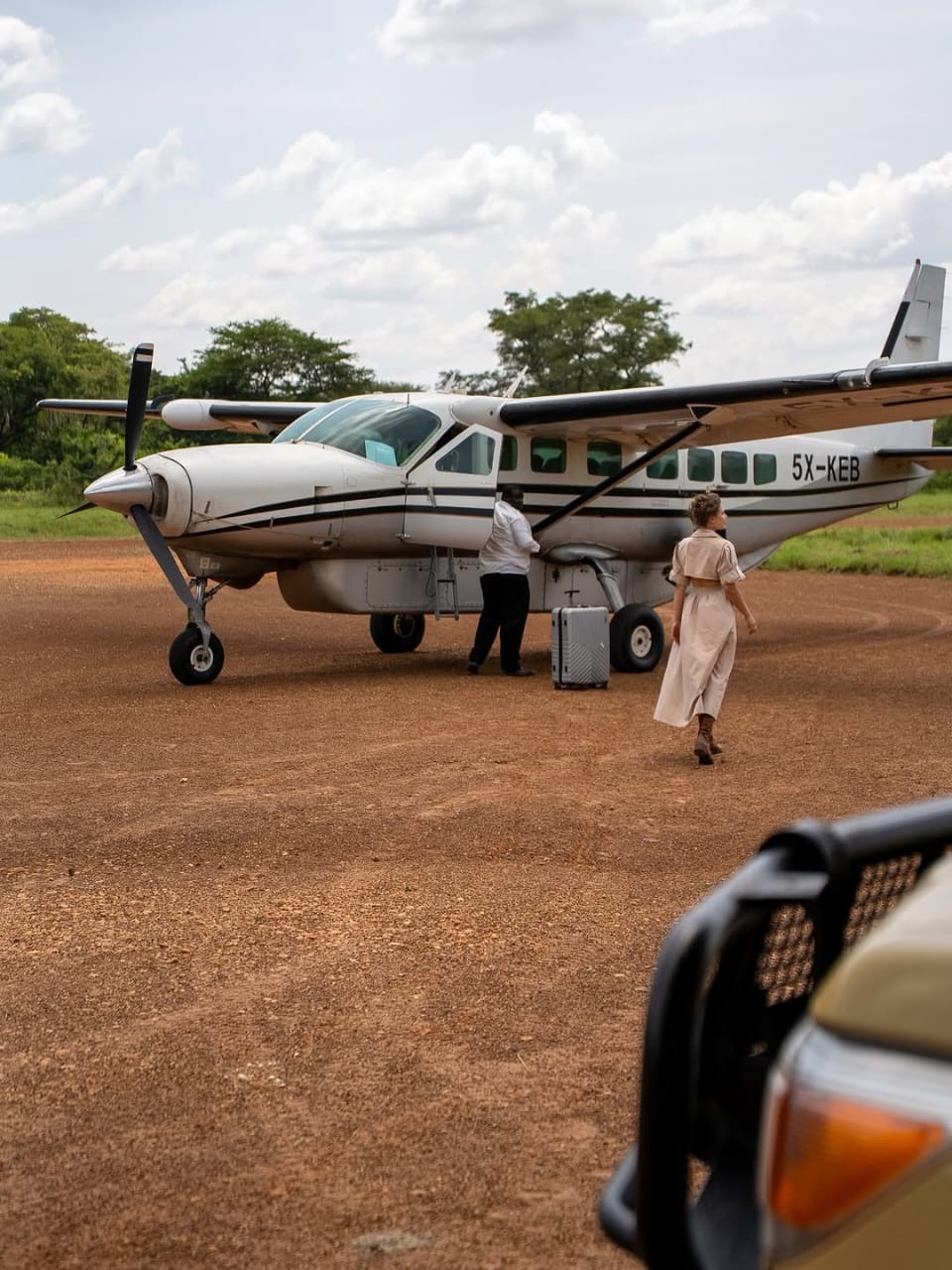
Tourists arriving at Kisoro Airstrip ahead of the gorilla trekking activity, with a tour guide ready to receive them for the onward transfer to the lodge to unwind.
Most international visitors arrive at Entebbe International Airport, about 40 kilometers from Kampala, Uganda’s capital. From Entebbe, you can take domestic flights to Kihihi Airstrip (for Buhoma and Ruhija sectors) or Kisoro Airstrip (for Nkuringo and Rushaga sectors). The flight takes around 1.5 hours, which is much faster than traveling by road, though it costs more and depends on the weather.
Aerolink Uganda and Bar Aviation are among the airlines offering domestic flights. There are daily flights during busy months, but fewer flights in the off-season. It’s important to book early, especially from June to September and December to February, when flights fill up quickly.
By Road
Traveling by road from Kampala to Bwindi takes 8 to 10 hours, depending on your destination and the road conditions. The drive is scenic, passing through Masaka, across the equator, through Mbarara, and up into the Kigezi Highlands, where the air gets cooler and the views become more dramatic.
If you plan to visit other places in Uganda, traveling by road gives you more flexibility and can save money. You’ll also have chances to meet local people and see more wildlife along the way. Many visitors find the drive, with its views of rural life and beautiful highlands, just as memorable as seeing the gorillas.
Border Crossings
If you’re visiting both Uganda and Rwanda, you can cross at the Katuna border (for northern Rwanda) or the Chanika border (for southern Rwanda and Volcanoes National Park). Crossing the border is usually simple, but it can take longer during busy times. Citizens of East African Community countries have an easier process, while others need the right visas for each country.
15. Accommodation Options

A sneak peek of the comfort of a lodge in Bwindi - luxury in the ancient forest.
Luxury Accommodation
Erebero Hills Lodge - Buhoma Sector
Only 8 suites, set on 45 acres of reforested land
Private balcony, indoor/outdoor shower, view-facing bathtub
Sunken fireplace lounge and library
Hillside swimming pool with panoramic forest views
In-suite spa treatments
Built from locally sourced bamboo, blending into the hillside
30-minute drive to the nearest gorilla trekking point
Batwa community visits, tea tasting and reforestation walks
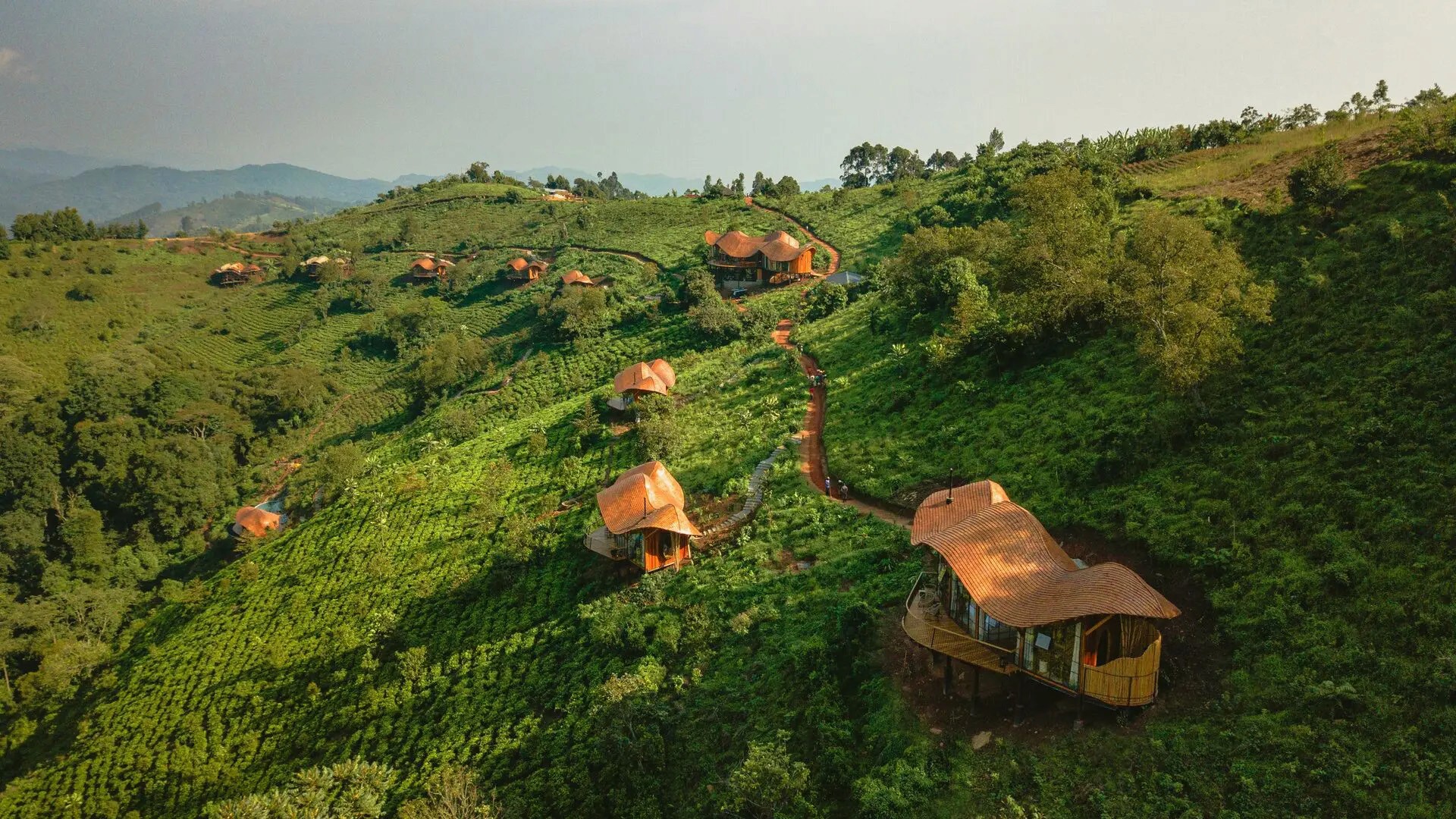
Erebero Hills Lodge Aerial View.
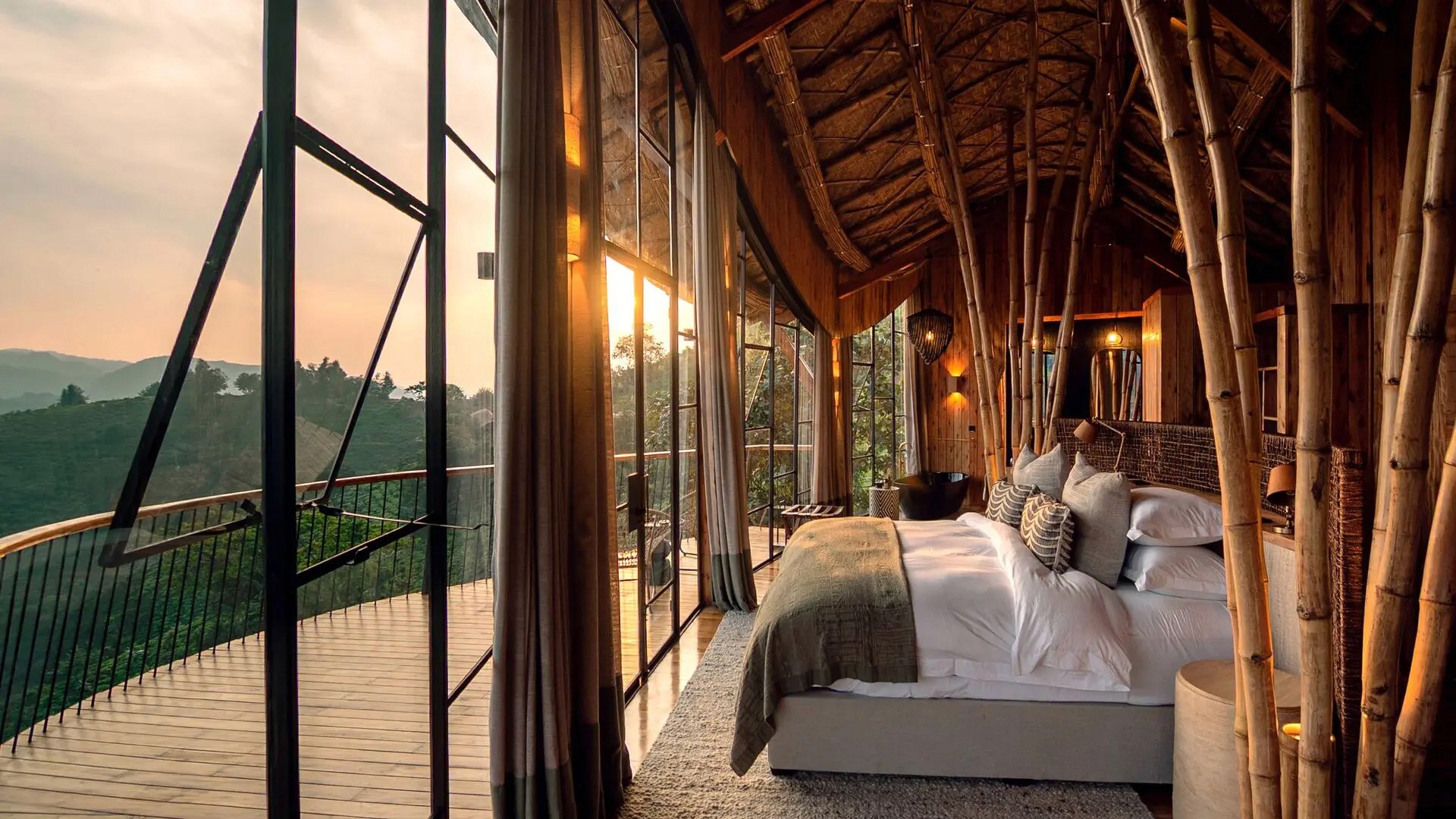
Erebero Hills Room Details.
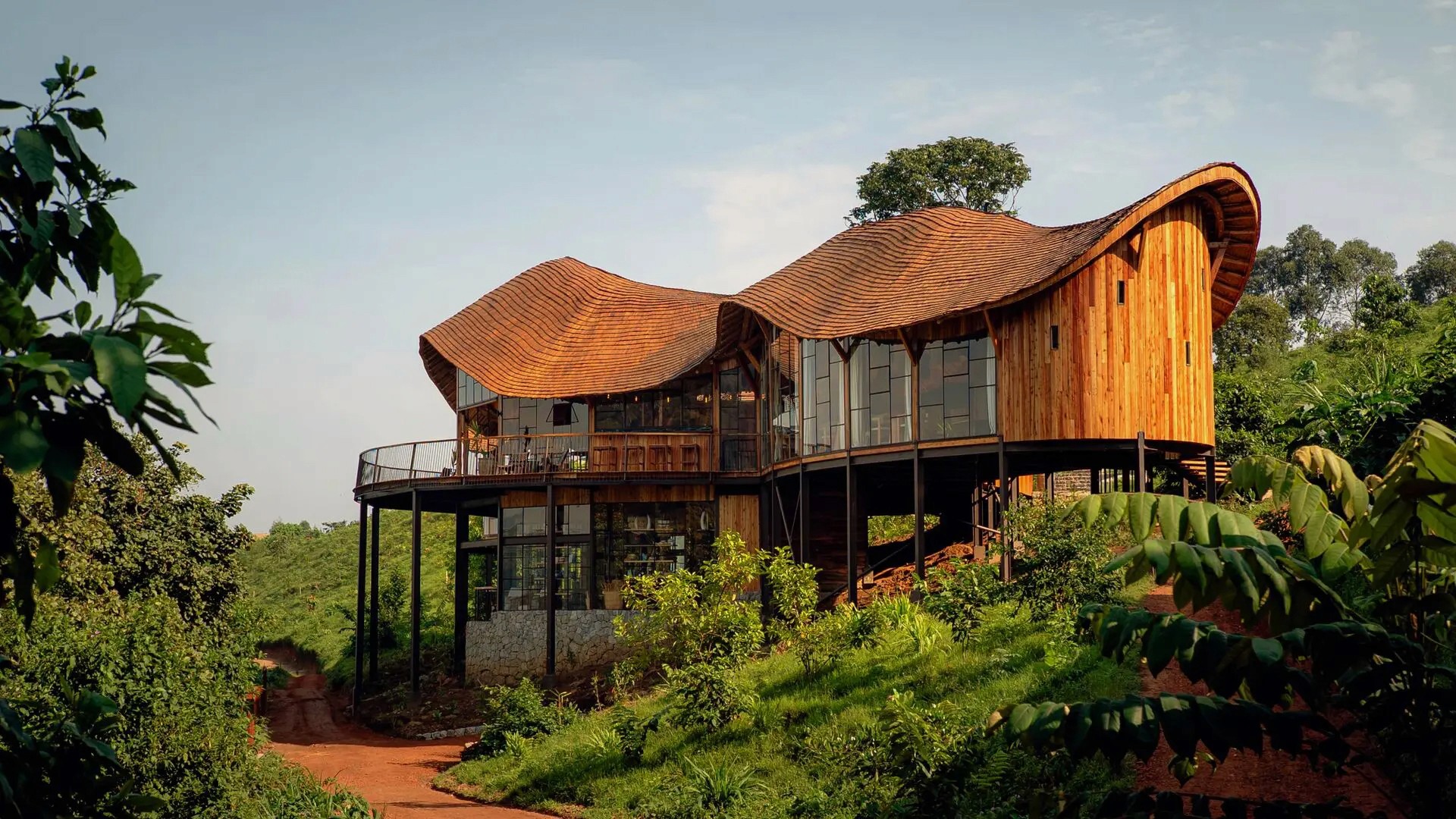
A cottage at the Erebero Hills Lodge.
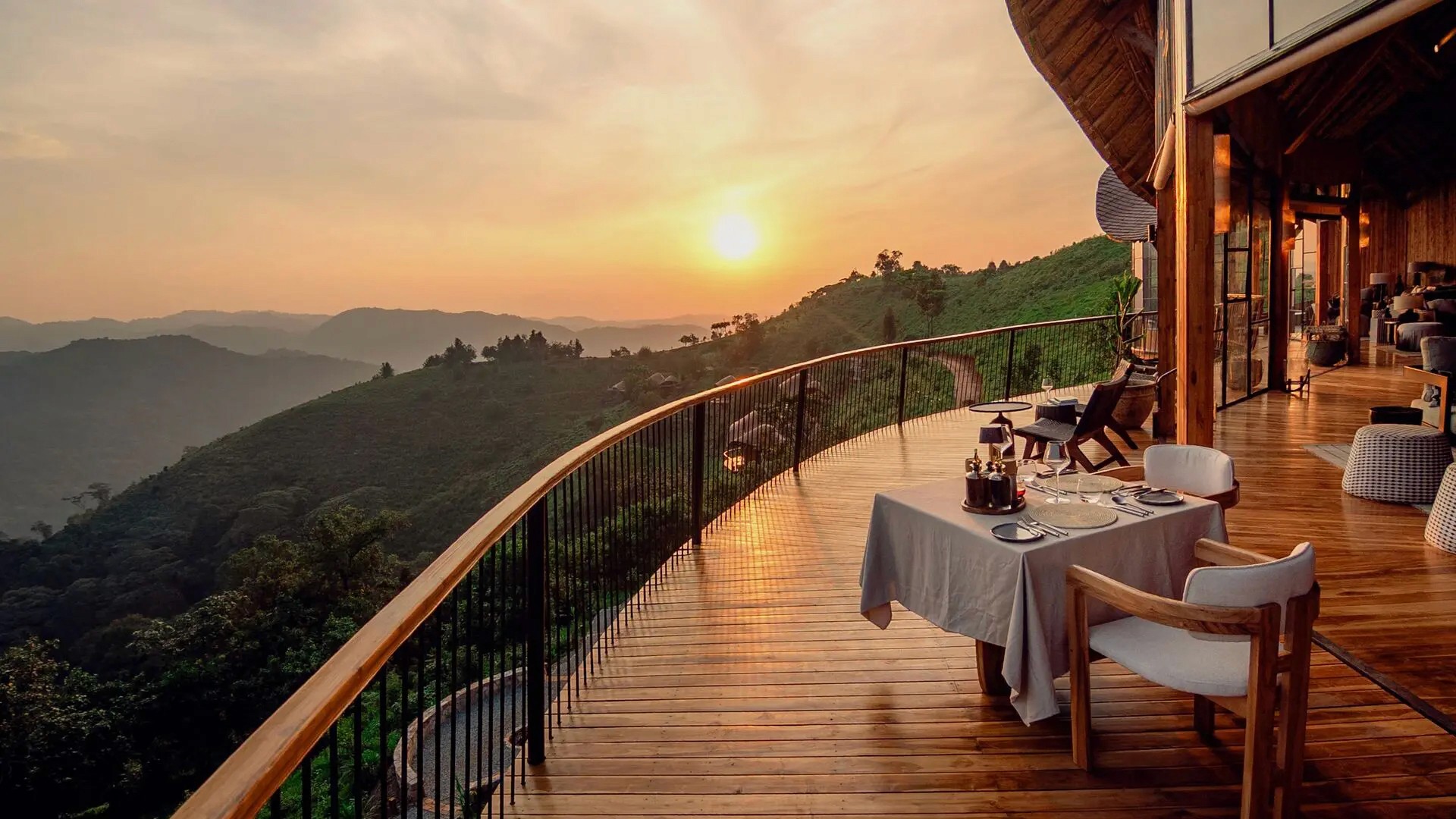
A view of the Bwindi Forest from the comfort of the room and balcony of the Erebero Hills Lodge.
Clouds Mountain Gorilla Lodge - Nkuringo Sector
Edge-of-forest location
Amazing Virunga volcano views
Ultra-luxury stone cottages
Fireplaces and private terraces
Built with local materials and styles
Five-star amenities: spa, gourmet dining, personal service
Special cultural experiences available
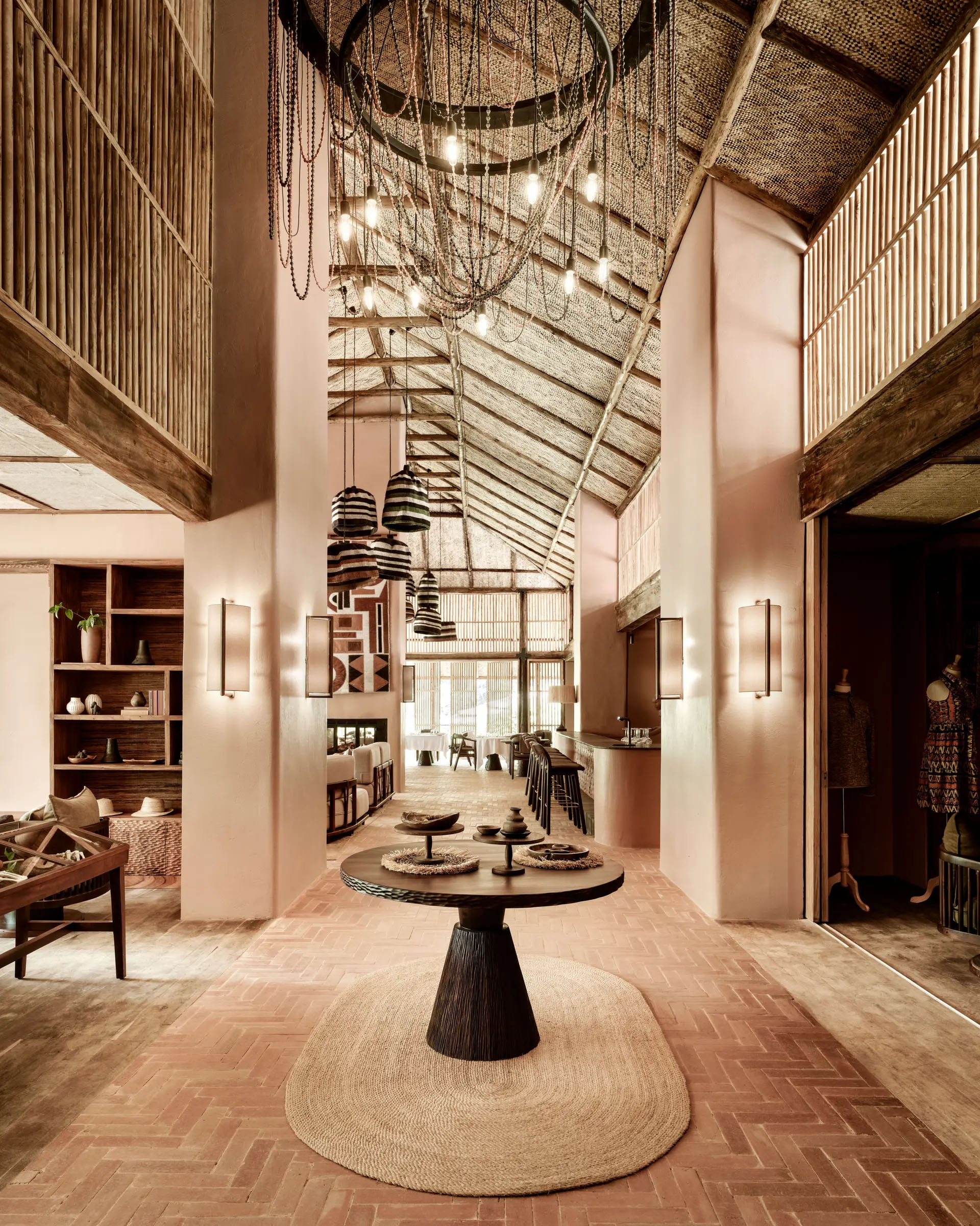
The details of the A&K Gorilla Forest Lodge.
A&K Sanctuary Gorilla Forest Lodge - Buhoma Sector
Luxury lodge, set right in the forest
Surrounded by nature and wildlife
Large tents with real bathrooms
Comfortable beds
Private decks with forest views
Restaurant focuses on fresh, local ingredients
Bar for relaxing after treks
Cultural Entertainment
Fireplace and storytelling
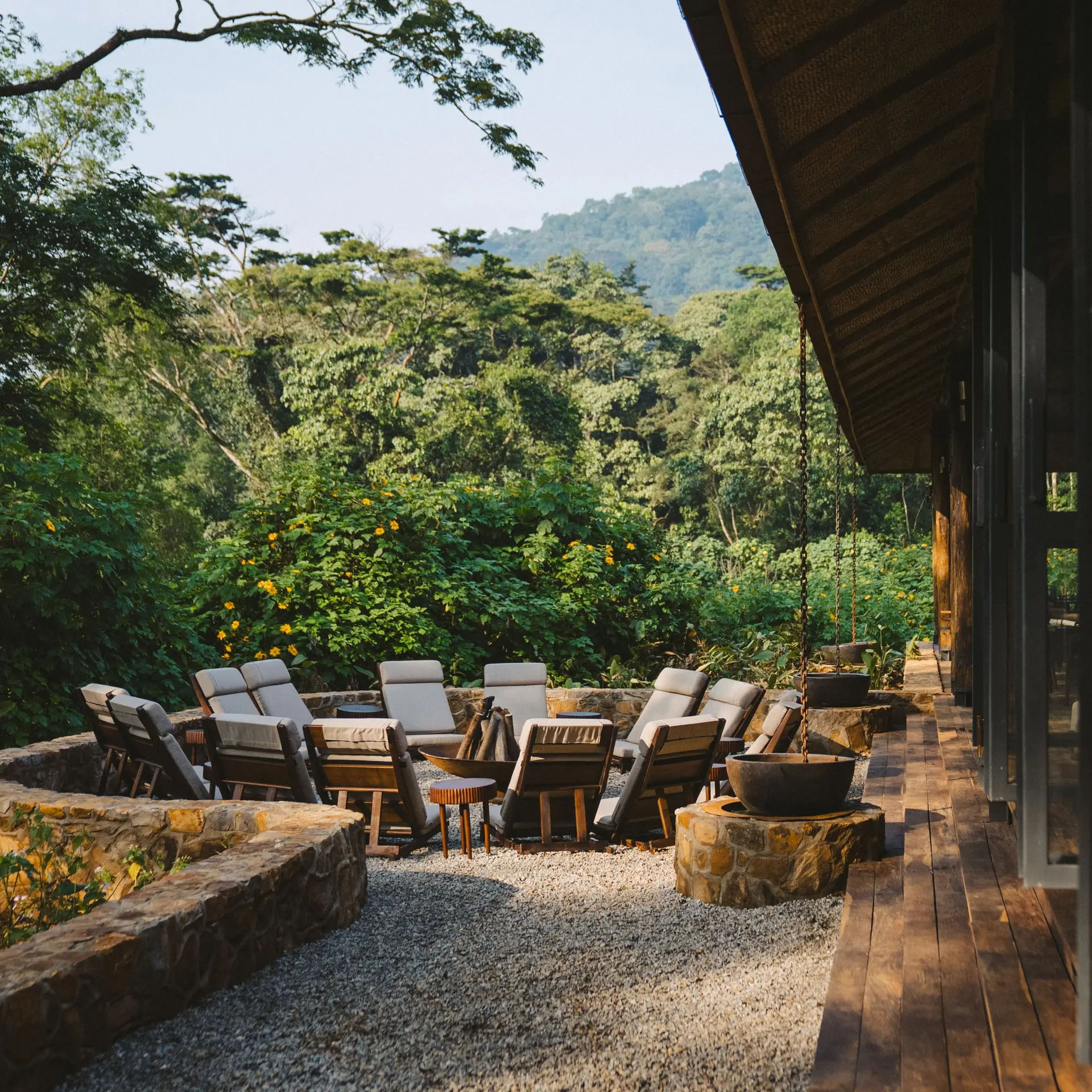
A fireplace at the GFL - Sanctuary in Bwindi.
Midrange Accommodation
Mahogany Springs Lodge - Buhoma Sector
Luxury eco-lodge
Solar-powered, local materials
Low environmental impact
Suites with forest views
High-end bathrooms, private balconies
Spa for relaxation
Restaurant: international dishes with local touches
Supports community (local staff and suppliers)
Buhoma Lodge - Buhoma Sector
One of Uganda's top gorilla safari lodges
Luxury rooms in raised pavilions
Views over the forest
Private bathroom, sitting area, veranda
Gourmet restaurant
Bar with premium and local drinks
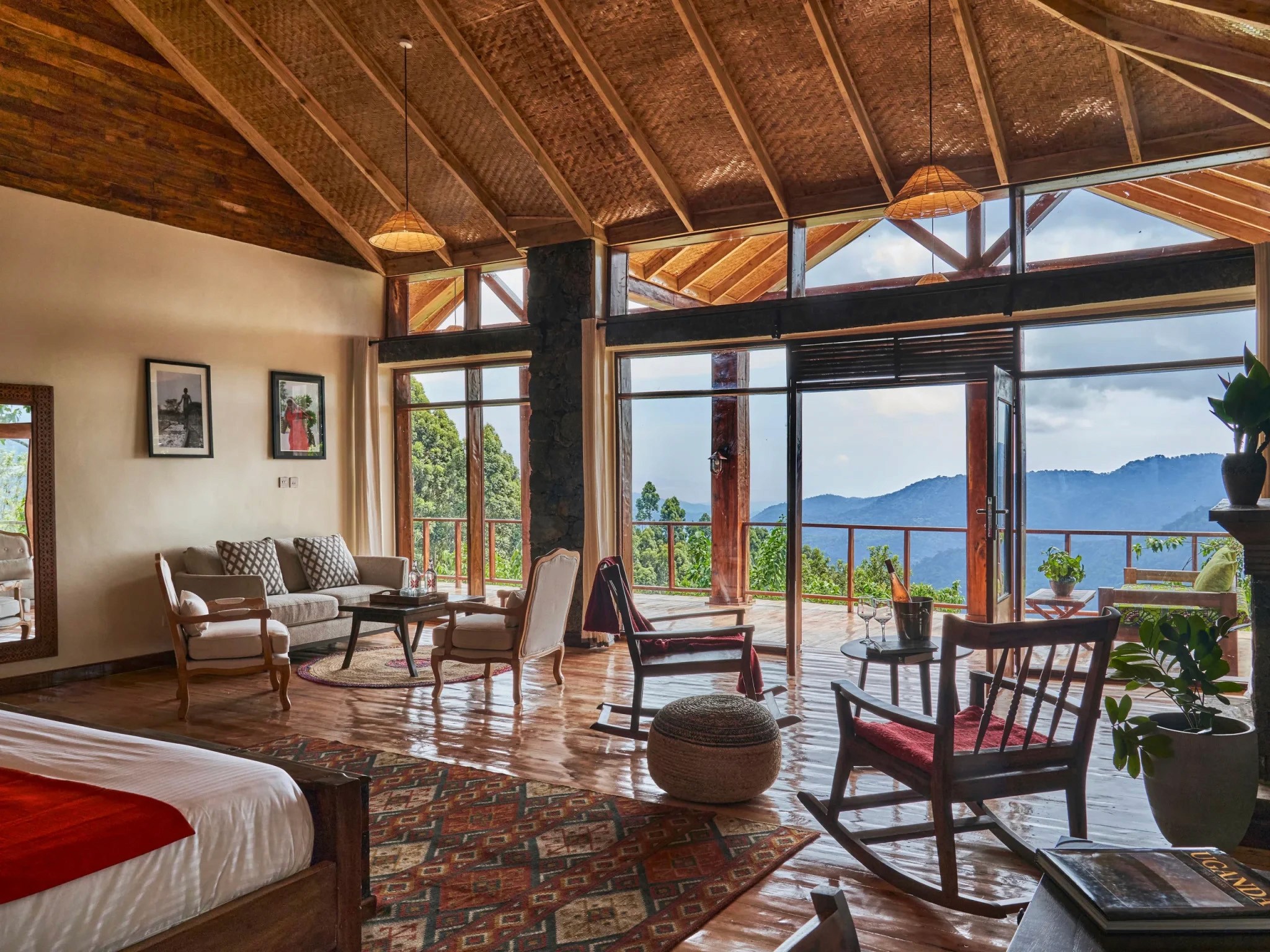
A comfortable lounge in a mid-range lodge in Bwindi, with a view of the intact forest canopy shrouded in mist.
Silverback Lodge - Buhoma Sector
Ridge location, forest views
Comfortable cottages
Private bathrooms, hot showers
Restaurant with international dishes
Bar with a range of drinks
Spa for post-trek massages
Arranges cultural performances and nature walks
Ruhija Safari Lodge - Ruhija Sector
Eco-friendly (solar power, rainwater collection)
Built with local materials
Spacious rooms with forest views
Modern comforts
Restaurant uses organic garden-grown ingredients
High location — great for birdwatching
Beautiful sunrise views
Nkuringo Gorilla Lodge - Nkuringo Sector
Built with local community involvement
Volcano views
Private bathrooms, traditional decor
Restaurant: international and local food
Village visits available
Traditional craft demonstrations
Strong community ties
Rushaga Gorilla Havens Lodge - Rushaga Sector
Newer midrange lodge, set in the forest
Modern comforts
Comfortable rooms, private bathrooms
Nice views
Known for good value and cleanliness
Friendly service
Restaurant and bar on-site
Staff help arrange gorilla treks
Budget Accommodation
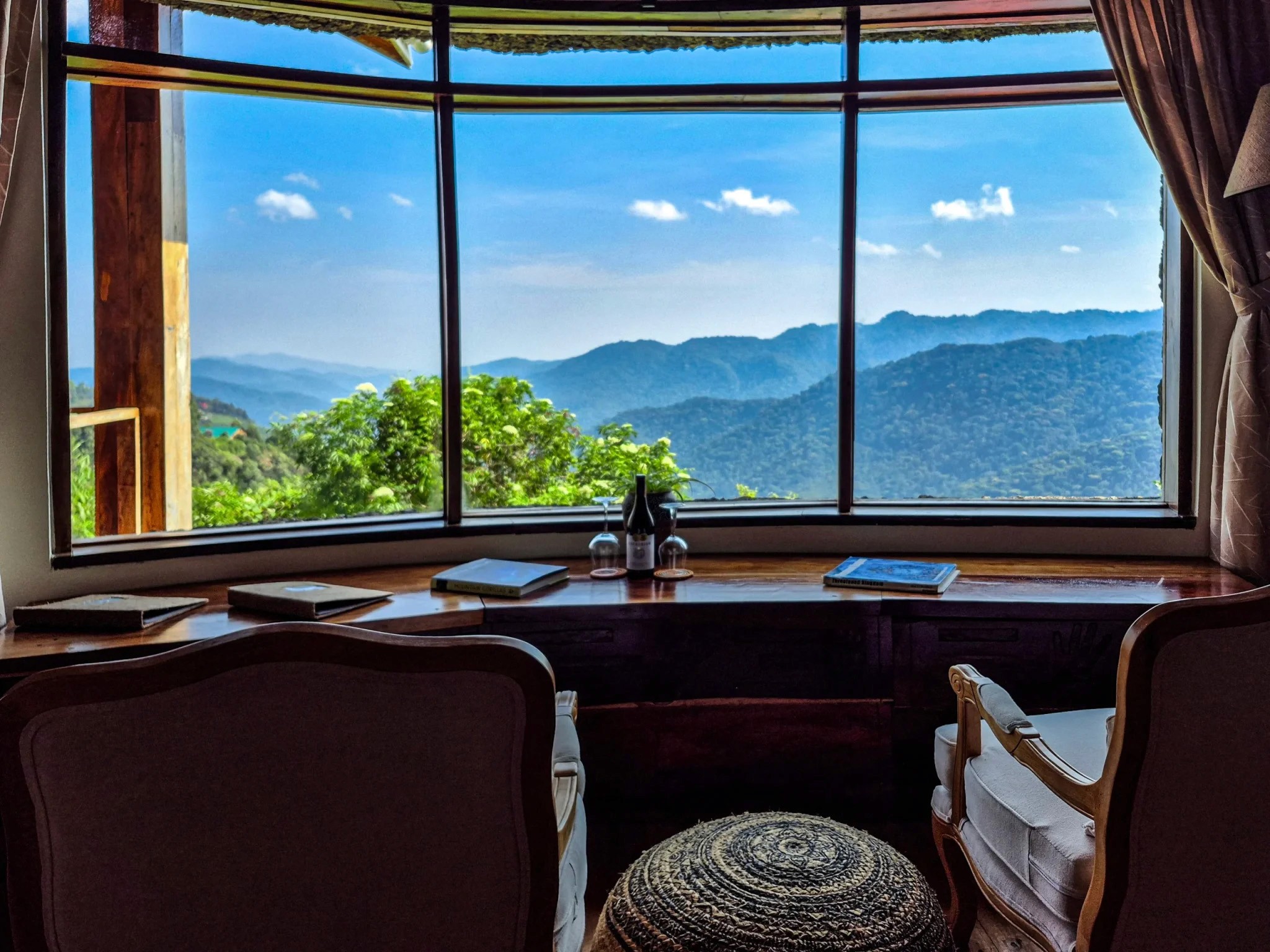
A view of the Bwindi forest from the comfort of your lodge.
Buhoma Community Rest Camp - Buhoma Sector
Short walk from park headquarters
Community-owned camp
Simple, clean dorm-style rooms
Shared bathrooms
Meals cooked by local staff
Basic restaurant on-site
Can arrange cultural performances
Supports community projects
Ruhija Gorilla Safari Lodge - Ruhija Sector
Hilltop location with great forest views
Simple rooms, private bathrooms
Restaurant serving local food
Birdwatching right from your room
Staff organize guided nature walks
Arranges visits to nearby communities
Gorilla Valley Lodge - Rushaga Sector
Newer, budget-friendly lodge
Clean, simple rooms
Private bathrooms
Restaurant with local and international food
Close to several gorilla families
Reasonable prices
Laundry services available
Help with booking activities
16. Other Activities in Bwindi
Birdwatching
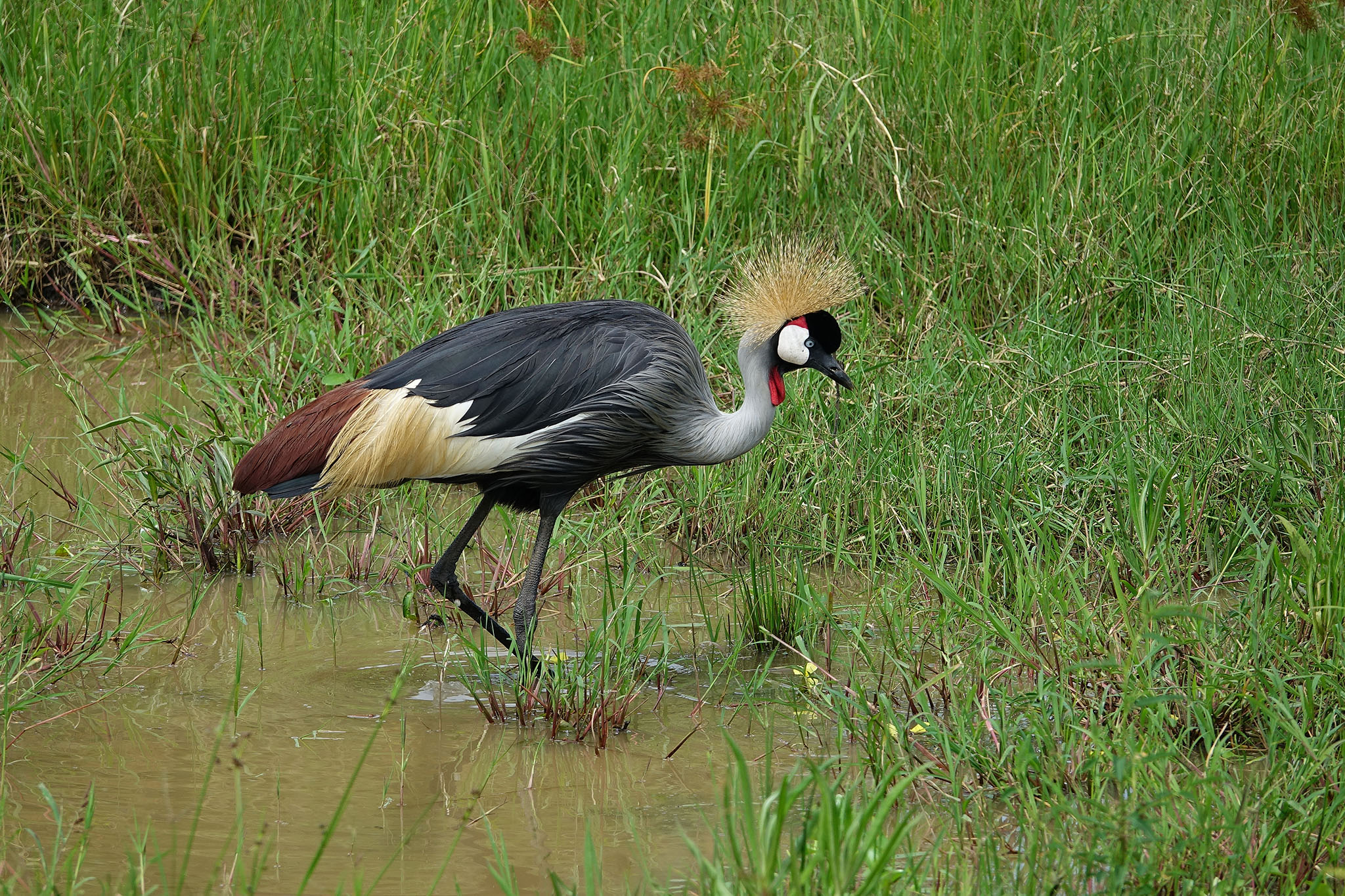
A grey crowned crane on a hunt in the Bwindi marshes - this beautiful bird is also Uganda's national bird, as seen on the country's flag.
Bwindi is one of Africa’s top birdwatching spots, with over 350 species, including 23 you won’t find anywhere else. The best times to see birds are early morning and late afternoon, when the forest is alive with bird calls and activity.
Expert birdwatching guides know the calls, habits, and favorite spots of rare and local birds, making it much easier to spot them. Bwindi’s different elevations mean you can see birds that live on the forest floor as well as those high in the trees, each needing a different approach.
Some standout birds are the African Green Broadbill, Shelley’s Crimson Wing, and many colorful sunbirds. The Rwenzori Turaco, with its bright red and green feathers, is one of the most impressive birds in the area and a favorite for birdwatchers.
Nature Walks and Forest Hikes

A wooden walking path in Bwindi Forest, helping visitors cross small rivers during nature walks and gorilla trekking.
Guided nature walks let you discover Bwindi’s amazing plant life and spot smaller animals you might miss on a gorilla trek. Walks can be easy strolls near the park headquarters or tougher hikes to waterfalls and viewpoints, so choose one that matches your fitness and gear.
The Munyaga River Trail takes you to stunning waterfalls in some of Uganda’s prettiest forest, with chances for photos and even swimming in natural pools. The Rushura Hill Walk offers wide views over the forest and toward the Virunga volcanoes, passing through areas with lots of different plants and animals.
On medicinal plant walks, local guides show you how forest plants are used in traditional medicine and daily life. These walks teach you about the close ties between local people and the forest, and why protecting these ecosystems matters for their way of life.
Batwa Cultural Experiences
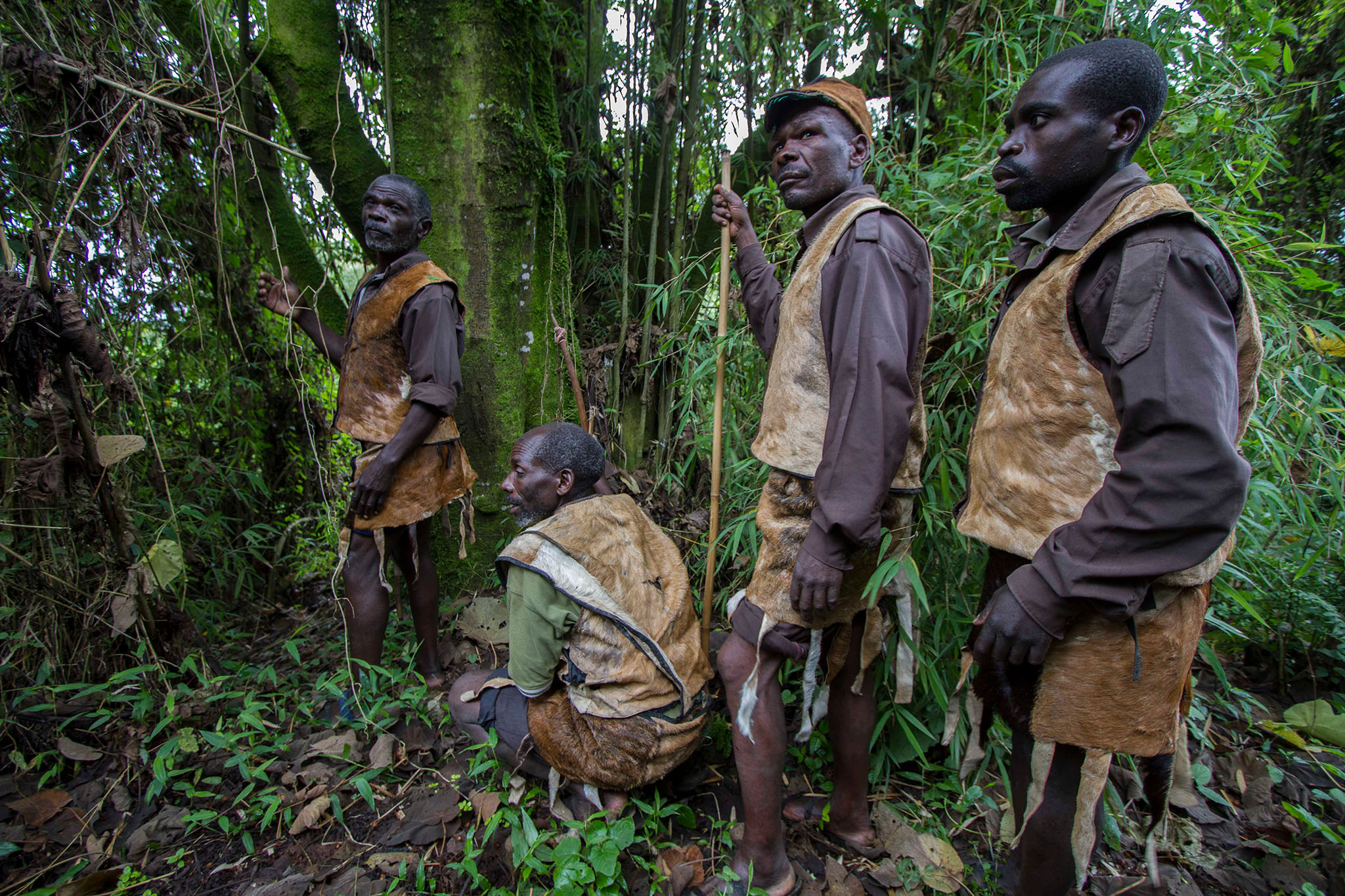
The Batwa showcasing their bush lifestyle to tourists in Bwindi.
The Batwa cultural experience lets you learn forest survival skills from Uganda’s indigenous people and helps support their communities. You can watch traditional hunting demonstrations (with safe methods), learn how to make fire, identify medicinal plants, and pick up navigation skills that have been passed down for generations.
Cultural performances with traditional dances, songs, and stories give you a glimpse into Batwa history, beliefs, and their connection to the forest. These experiences help keep their traditions alive and provide income for community members who lost their forest homes when the park was created.
Village walks in Batwa communities show how people are adapting from forest life to farming and tourism. You can buy traditional crafts straight from the makers and learn about the materials, techniques, and meaning behind each item.
Community Visits
Community visits aren’t limited to the Batwa. You’ll also meet other groups living near the park and see how conservation impacts different people. These visits often include stops at schools, health centers, and projects funded by tourism, showing how gorilla tourism benefits local communities.
You can watch traditional farming demonstrations to see how people farm sustainably in the highlands. Local craft workshops let you try basketry, pottery, and textile making. These hands-on activities offer real cultural exchanges and help support local artisans and their families.
Community-based tourism means your spending goes straight to local families through guided walks, performances, and craft sales. These programs have turned some former critics of the park into strong supporters of conservation, as they now see the value in protecting gorilla habitats.
17. When to Visit Bwindi
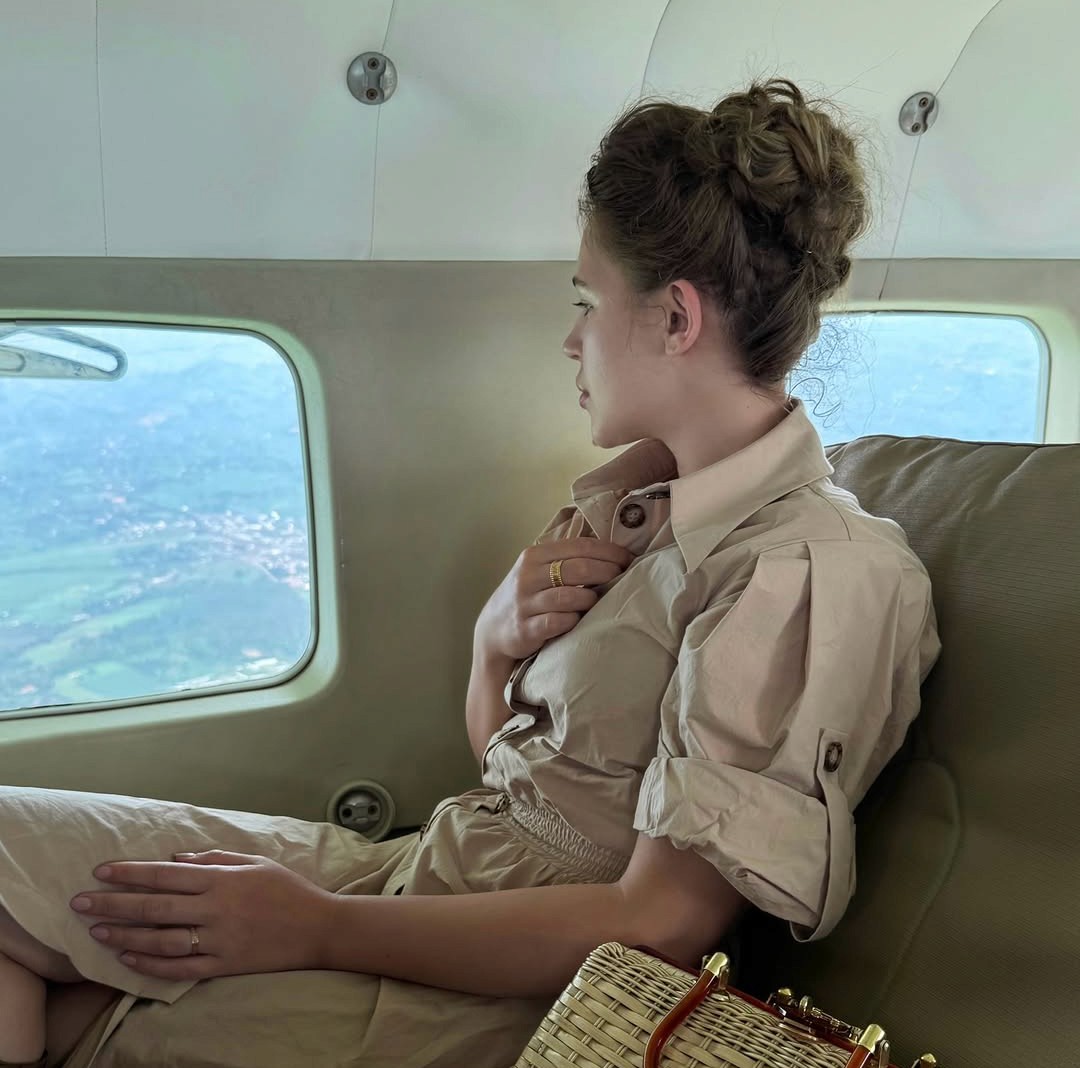
A tourist observing the Bwindi forest from above, aboard a flight to the park ahead of the gorilla trekking experience.
Knowing Bwindi’s seasonal patterns helps visitors pick the best times for gorilla trekking and set realistic expectations for weather and wildlife viewing. While temperatures stay fairly steady all year, changes in rainfall have a big impact on trekking and animal activity.
Dry Seasons (June to August and December to February)
The dry seasons are the busiest times for tourists, offering the best conditions for gorilla trekking. Trails are less muddy, visibility is better, and hiking is easier. Still, even in the dry months, light rain is possible and mist is common all year.
During the dry season, animals gather around water sources and are more active, making wildlife easier to spot. Gorilla families may travel farther, so treks can be longer, but this also lets you see new parts of the forest and different wildlife.
The downside of visiting in the dry season is that permits are in high demand, accommodation costs go up, and popular areas get crowded. You’ll need to book much earlier, and there’s less flexibility as spots fill up quickly.
Wet Seasons (March to May and September to November)
The wet seasons have some benefits: fewer tourists, lower accommodation prices, and a greener forest that’s great for photos. Rain usually comes as afternoon storms, so mornings are often clear enough for gorilla trekking.
In the wet season, Bwindi is at its greenest, with blooming trees, flowing waterfalls, and lots of birds, making the forest feel magical. More insects mean more birds, so it’s a great time for birdwatchers to visit.
The wet season brings some challenges: trails get muddy and slippery, so you’ll need good shoes and be ready for tougher hikes. Gorillas may hide during heavy rain, which can make them harder to see, and taking photos is trickier with less light and more humidity.
Year-Round Considerations
Because Bwindi is at different heights, temperatures can change from warm in the valleys to cool on the ridges. It’s best to wear layers no matter when you visit. Mornings are usually cool and misty, it warms up by midday, and then cools down again in the afternoon.
Bwindi’s mountain weather can change quickly, so it’s smart to be ready for anything, no matter the season. Always pack rain gear, waterproof boots, and warm clothes. When the sun comes out, you’ll also need sun protection, especially at higher altitudes.
Gorilla behavior changes with the seasons as their food sources shift, which affects how and where they move. This means your trekking experience can vary depending on the time of year. Guides adjust their tracking methods to match the season, always keeping safety and the gorillas’ well-being in mind.
18. Frequently Asked Questions
Is it safe to visit Bwindi Impenetrable National Park?
Is it safe to visit Bwindi Impenetrable National Park?
Yes, Bwindi Impenetrable National Park is considered safe for visitors. All activities follow strict safety protocols, and park rangers join every gorilla trekking group. These rangers are trained in wildlife behavior, first aid, and emergencies. The Uganda Wildlife Authority keeps high safety standards, and serious incidents are very rare as long as visitors follow the guides’ instructions and park rules.
Security in the region has improved a lot over the years, thanks to stable politics and strong government support for tourism. Still, visitors should check current conditions and follow travel advisories from their own governments, especially about areas near the border with the Democratic Republic of Congo.
What is Bwindi Impenetrable National Park famous for?
Bwindi Impenetrable National Park is world-famous for hosting nearly half of the world’s remaining mountain gorillas and for offering close-up wildlife experiences. Its UNESCO World Heritage status highlights its rich biodiversity, with over 350 bird species and 200 types of trees, making it one of Africa’s most diverse forests.
The park gained international recognition for its conservation success story, showing how community tourism can protect endangered species and help local people earn a living. Its ancient forest, which survived the ice age, also gives important insights into how tropical forests evolve and how they can be protected.
How much does it cost to go to Bwindi Impenetrable National Park?
A gorilla permit in Uganda costs $800 for foreign non-residents, which is much less than Rwanda’s $1,500 permit. This makes Uganda a good choice for travelers on a budget. Other costs include accommodation ($50–500+ per night), transportation ($200–800), meals, and optional activities like cultural visits or birdwatching.
Most people spend between $1,500 and $5,000 or more per person for a trip, depending on where they stay, group size, trip length, and extra activities. Budget travelers can save by picking community-run places and group tours, while those wanting luxury can choose high-end lodges and private transfers.
Why is it called Impenetrable Forest?
“Bwindi” comes from the local Rukiga word for “dark place.” The word “Impenetrable” describes the forest’s thick vegetation, which made it very hard for people to enter in the past. Steep hills, thick plants, tangled vines, and a dense tree canopy all helped protect this ecosystem for thousands of years.
The forest’s thick growth protected mountain gorillas and other wildlife, letting them survive here even when similar habitats vanished elsewhere in Africa. Today, trails make it possible for visitors to explore, but the dense plants still give the park its mysterious, almost cathedral-like feel.
What is the best time of the year to see gorillas in Bwindi National Park?
The best time for gorilla trekking is during the dry seasons, from June to August and December to February, when trails are less muddy and the weather is clearer. Still, you can see gorillas almost any time of year (with a 98%+ success rate) because the families stay in known areas no matter the weather.
The wet seasons, from March to May and September to November, have some benefits too. There are fewer visitors, lower accommodation prices, and the forest is especially green, which is great for photos. Some experienced travelers even prefer these months for a more peaceful and wild experience, even though trekking can be tougher.
How far in advance should I book gorilla trekking in Uganda?
It’s best to book your gorilla permit 3 to 6 months ahead, especially if you want to visit during busy times. Only 8 permits are available per gorilla family each day, so spots fill up fast. For peak months (June–September and December–February), you might need to book up to a year in advance for certain dates.
Sometimes permits become available at the last minute when someone cancels, but relying on this can lead to disappointment and fewer choices in dates or locations. Booking through a trusted tour operator like Territory Explorers can help you get permits and offer backup options if your first choice isn’t available.
Which is better for seeing gorillas, Uganda or Rwanda?
Both Uganda and Rwanda are great for seeing gorillas, but each has its own strengths. Uganda is home to more than half of the world’s mountain gorillas, spread across 21 habituated families. This means you have more chances to see gorillas and a higher success rate for encounters.
Uganda’s gorilla permits are $800, while Rwanda’s are $1,500, so Uganda is much more affordable and still offers amazing wildlife experiences. Rwanda is closer to its main airport and has more luxury hotels, but Uganda gives you more adventure and a true wilderness feel in remote forests. Your choice depends on your budget, comfort needs, and how much adventure you want.
Is there an age limit for gorilla trekking?
Yes - the minimum age is 15 years old, enforced consistently across all three countries where mountain gorillas live: Rwanda, Uganda, and the Democratic Republic of Congo.
There's no official upper age limit, and trekkers in their 70s and 80s regularly complete treks, with porter assistance and sedan chair carriers available for elderly or mobility-limited visitors.
19. Conclusion
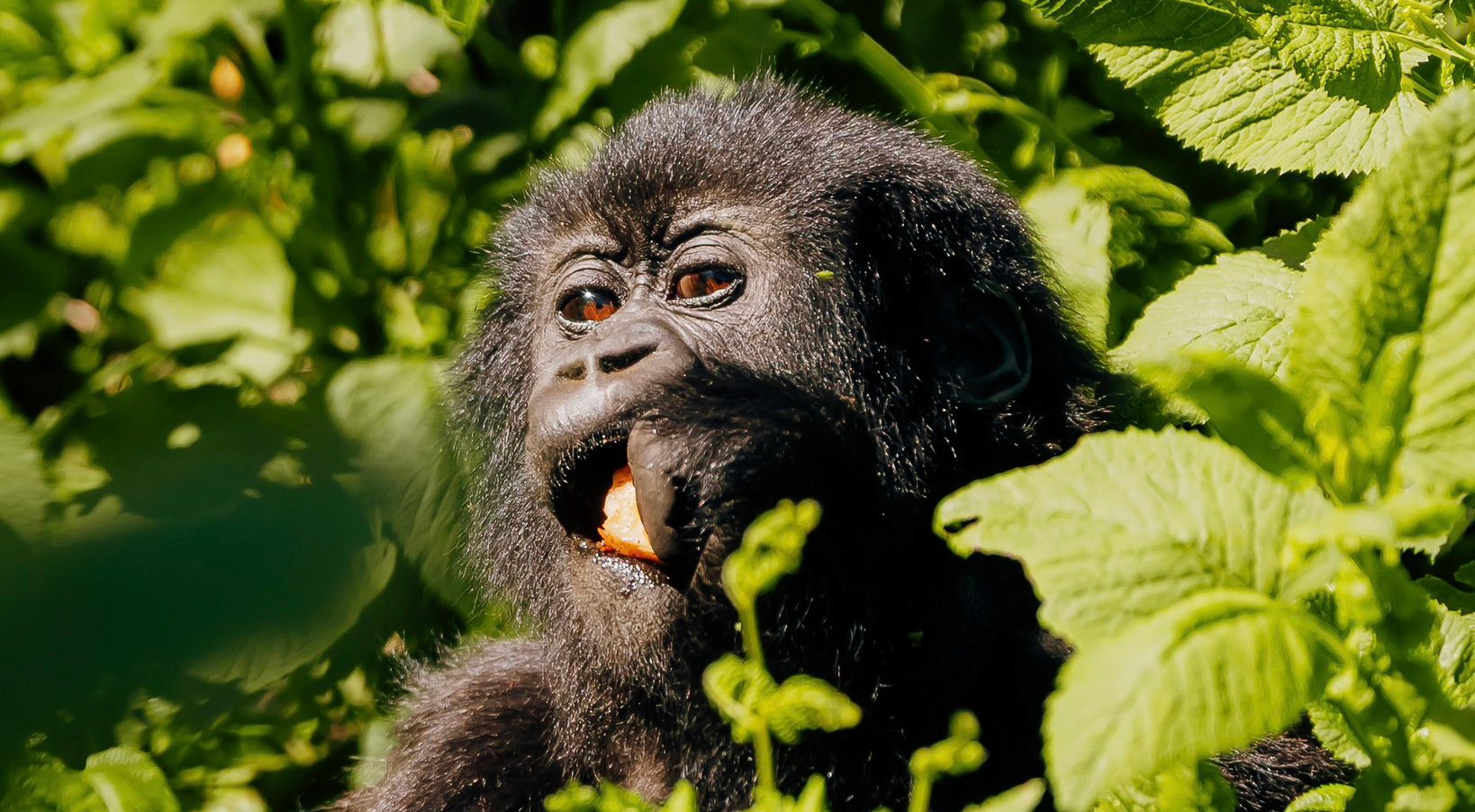
A juvenile gorilla feeding on leaves in Bwindi - Gorillas are largely herbivores.
Seeing Bwindi’s mountain gorillas is one of the various things to do in Uganda. It is both physically demanding and deeply moving. You might trek through muddy trails, meet the gaze of a silverback, or learn from Batwa community members. Each moment helps you feel part of something bigger. This trip goes beyond ordinary wildlife tourism and can change how you see our connection to nature.
Bwindi stands out not only for its gorillas, but also for how the whole area and its people have changed. Former poachers now work to protect wildlife, tourism money supports schools for local children, and the forest is thriving because communities rely on it for their future. This is one of Africa’s great conservation stories, showing that people and wildlife can live side by side when tourism offers real alternatives.
When you visit Bwindi, you help shape its conservation story. Buying a permit, hiring a local guide, or purchasing crafts all support the idea that people and wildlife can thrive together. Bwindi shows that endangered animals can recover, forests can be saved, and tourism can help nature. Visit not just as a tourist, but as a partner in conservation, ready to see what people can achieve when they work together.
If you want to go gorilla trekking in Bwindi, visit the Batwa, or explore the forest for study, there are many activities to enjoy. Contact us at info@territoryexplorers.com and we will help you plan your visit. Over the years, we have helped many clients have unforgettable experiences by taking care of all the planning, so they could focus on enjoying their trip. You can have a great experience too.

About the author:
Desire Ambrose
Founder, Territory Explorers
Desire is the Founder of Territory Explorers, a tourism company reshaping how travelers experience Uganda and East Africa. With a degree in Travel and Tourism Management from Makerere University and years of experience with safaris and conservation companies, he brings passion and purpose to every journey. An award-winning hospitality innovator, he excels at planning expeditions, crafting authentic marketing, and telling stories through photography. Desire believes tourism should transform both the traveler and the traveled.


